

 See My Latest Article on HelloNation
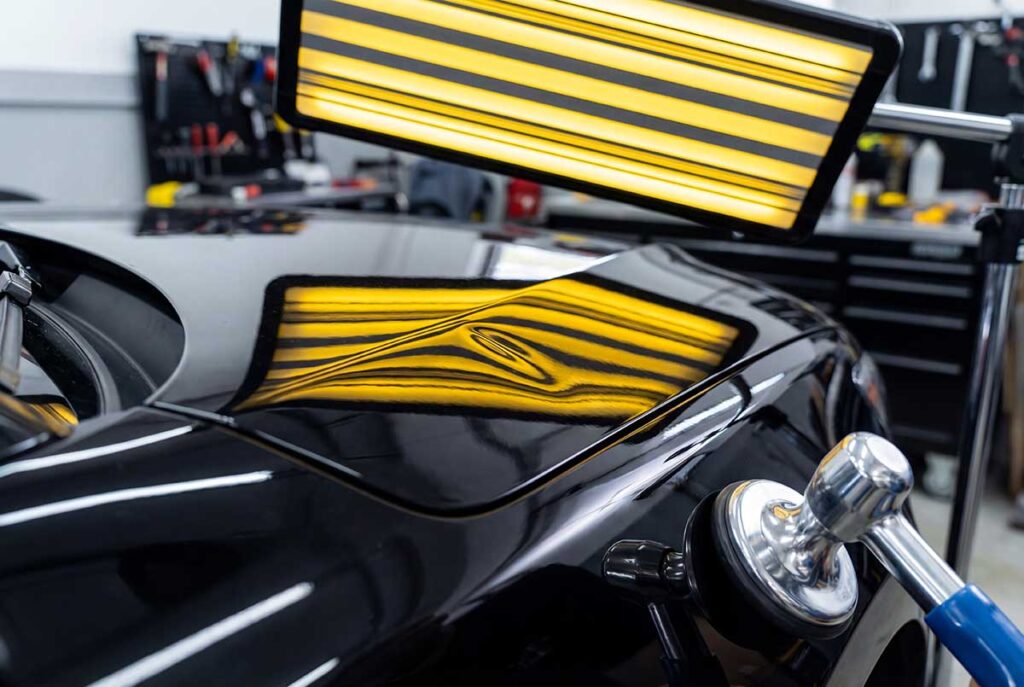
Paintless Dent Repair, commonly called PDR, can reduce the environmental impact of fixing certain vehicle dents because it preserves the original finish instead of replacing it with body filler, primer, and new paint. For minor dents, dings, and some hail damage, the repair process may require fewer materials, produce less waste, and avoid many of the emissions associated with refinishing.
PDR is not appropriate for every type of damage. Its environmental advantages apply mainly when the metal can be reshaped and the factory paint remains intact.
What makes Paintless Dent Repair different?
Paintless Dent Repair reshapes a vehicle panel from behind or, in some cases, pulls the metal gradually from the outside. The goal is to restore the panel without grinding away the existing finish or covering the damage with filler.
A conventional repair may involve several steps:
- Sanding damaged paint
- Applying body filler
- Sanding the filler smooth
- Spraying primer
- Mixing and applying paint
- Applying clear coat
- Using solvents to clean tools and surfaces
- Disposing of masking materials, sanding discs, containers, and paint-related waste
PDR avoids most or all of those steps when the damage is suitable. The original factory coating stays on the vehicle, and the repair focuses on correcting the shape of the metal.
Does PDR reduce air pollution?
Yes, PDR can reduce air emissions by avoiding many paint and solvent operations. Auto body refinishing can release volatile organic compounds, commonly called VOCs, along with other airborne pollutants from paints, cleaners, primers, and paint strippers.
Those substances matter because VOCs can contribute to ground-level ozone formation. Refinishing also creates airborne particles during sanding, especially when workers smooth body filler or remove damaged coatings.
Because PDR generally does not require painting or extensive sanding, it can eliminate a significant portion of these activities for a qualifying dent. This does not mean every dent repair has zero emissions, but it can mean fewer products are opened, mixed, sprayed, evaporated, and cleaned up.
For households in Apex, seasonal heat and humidity can make outdoor air quality especially relevant. Reducing unnecessary refinishing work is one small way to limit the amount of paint-related material entering the local air during vehicle repairs.
How does PDR reduce repair waste?
PDR typically produces less solid waste than a repair that replaces or refinishes a body panel. Traditional bodywork can generate used sandpaper, sanding discs, masking paper, plastic coverings, mixing boards, paint containers, filler dust, disposable gloves, and contaminated cleanup materials.
A more extensive repair may also require replacing a damaged panel. That creates additional manufacturing, shipping, packaging, and disposal impacts. If an existing panel can be restored safely, keeping it in place avoids the material use associated with producing and transporting a replacement part.
The difference is most noticeable with minor parking-lot dents, shallow creases, and some hail-related damage. A small dent may not require new metal, new paint, or a replacement panel at all.
Does preserving factory paint have environmental benefits?
Preserving factory paint can have both environmental and practical benefits. Original coatings do not need to be stripped, recreated, or blended into nearby panels. That reduces the need for refinishing materials and limits the possibility of overspray.
Factory paint also remains a continuous protective layer over the metal. If a repair method damages the coating, the exposed area may require primer and paint to prevent corrosion. PDR is designed for situations in which the finish is still intact and flexible enough to tolerate the repair process.
This is especially relevant in a humid climate. Moisture can reach bare metal through chipped or cracked paint, eventually contributing to corrosion. Keeping an undamaged factory finish in place may reduce the need for future corrective work, although paint preservation alone cannot prevent rust if the coating is already broken.
Can PDR reduce water and chemical use?
It can. Conventional refinishing commonly involves cleaning, degreasing, paint preparation, equipment cleaning, and other activities that use liquids. Depending on the repair, these materials may include solvents, thinners, cleaners, primers, and coatings.
PDR uses specialized hand tools and lighting to reshape the panel. It does not require the same volume of liquid products used in a paint-based repair. Less chemical use can also mean less contaminated waste requiring careful handling.
The exact benefit depends on the damage and the repair process. A dent that also has fractured paint, stretched metal, sharp impact damage, or panel separation may still require conventional bodywork.
Is PDR completely environmentally friendly?
No. “Environmentally friendly” should not be interpreted as “no environmental impact.”
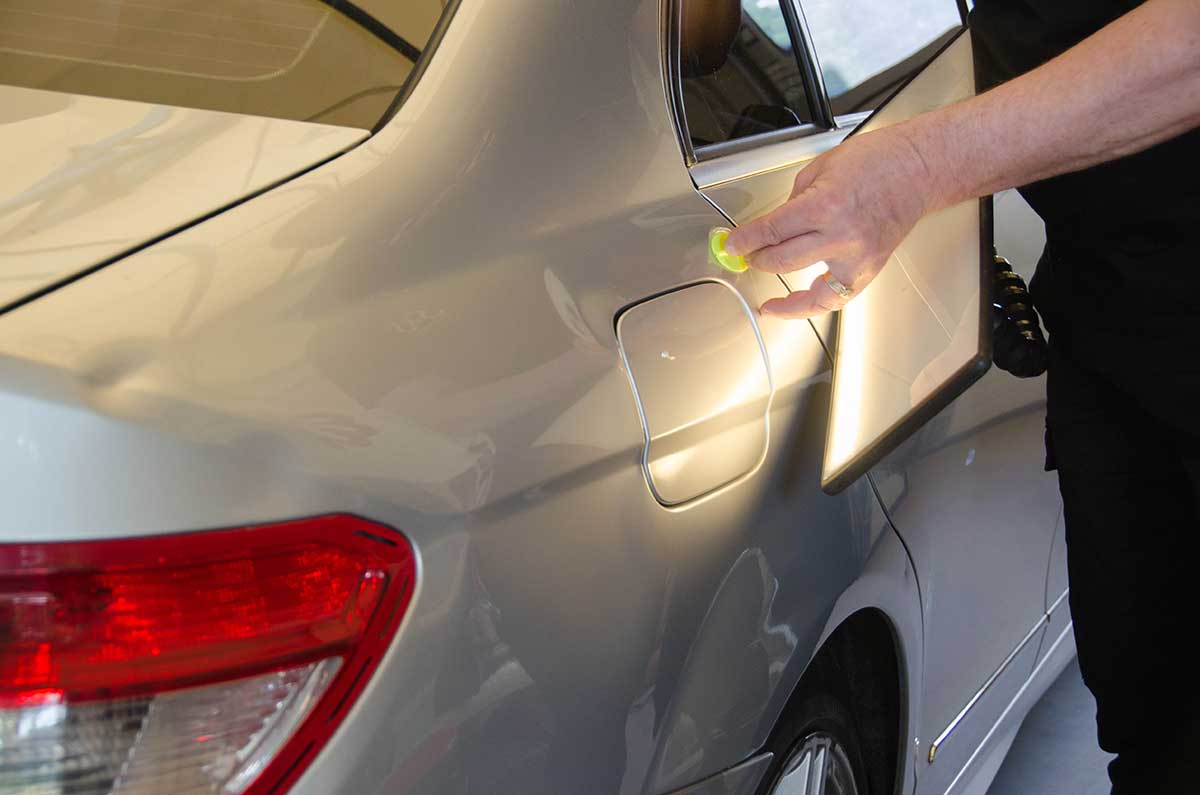
PDR still uses energy for lighting, tools, transportation, and the facility where the work takes place. It may also require protective coverings, cleaning materials, replacement clips, or access through interior trim. Some repairs involve glue tabs or other consumable materials.
The more accurate comparison is that suitable PDR usually has a lower material and emissions footprint than a comparable repair involving sanding, filler, painting, and clear coating. It is a waste-reduction approach, not a completely impact-free process.
Which types of damage are usually better suited to PDR?
PDR is generally considered for damage with an intact paint finish and enough access to the back of the panel. Common examples include:
- Small door dings
- Shallow dents from parking-lot contact
- Minor creases with limited paint damage
- Some hail dents
- Light impact damage on broad metal panels
- Dents that have not sharply stretched or torn the metal
The location matters as much as the size. A dent near a panel edge, body line, brace, or double layer of metal can be more difficult to repair. Aluminum panels may also require different tools and techniques than steel panels.
PDR is usually not the right method for heavily cracked paint, exposed bare metal, severe collision damage, sharply folded panels, or parts that must be replaced for safety reasons.
What should local vehicle owners consider after storms?
Apex residents may see vehicle dents after hail-producing thunderstorms or severe weather. A quick inspection can help determine whether the damage is limited to shallow dents or includes broken paint, cracked glass, loose trim, or safety-related damage.
Environmental considerations should not override safety. If a hood does not latch properly, a door does not close, lights are damaged, or glass is cracked, those concerns need to be addressed first. A dent that appears cosmetic may also be connected to hidden structural or mechanical damage after a stronger impact.
For minor dents with intact paint, preserving the original panel can avoid unnecessary refinishing materials. For more serious damage, the appropriate repair method should be based on safety, structural condition, corrosion protection, and the manufacturer’s requirements—not environmental preference alone.
Why does the choice of repair method matter?
The environmental difference between repair methods comes from the total process, not just the visible result. A repair that restores a dent without paint may avoid several stages of chemical use, sanding, waste generation, and replacement-part production.
That makes PDR a useful option to consider when the damage qualifies. The main questions are whether the paint is intact, whether the metal can be reshaped, whether the panel remains structurally sound, and whether the repair can be completed without compromising safety or corrosion protection.
For eligible damage, retaining the original panel and finish can be a practical form of material conservation as well as a way to return the vehicle to normal appearance.