

 See My Latest Article on HelloNation
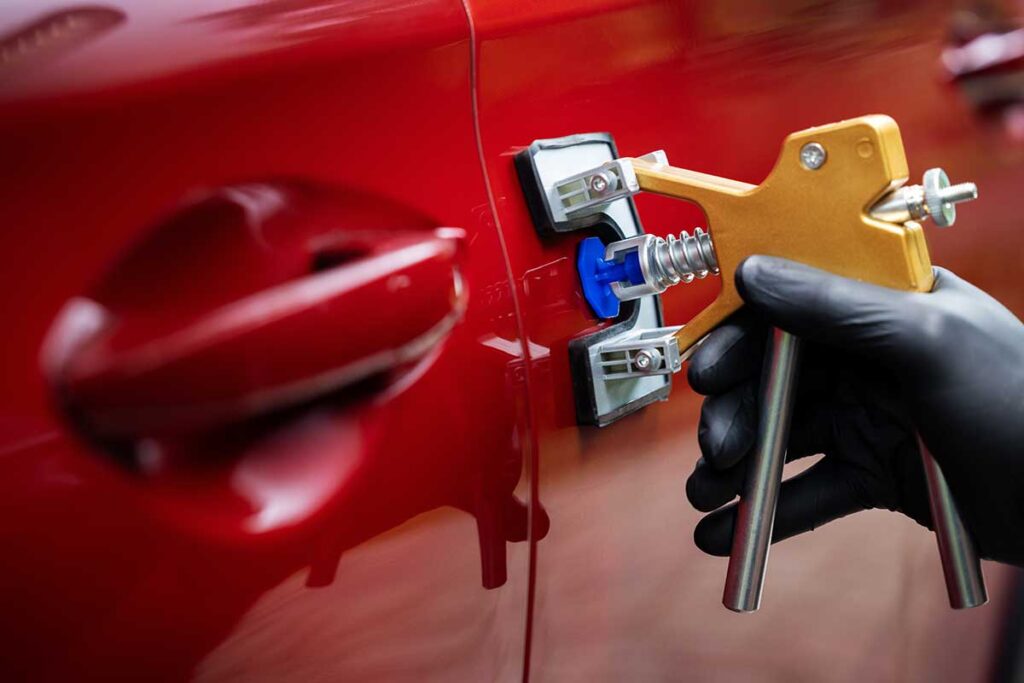
Paintless Dent Repair, or PDR, can correct many dents without disturbing the vehicle’s original paint. It is not a universal solution, however. The repair method works best when the paint remains intact, the metal or aluminum has not been stretched too far, and the technician can safely reach the back of the damaged panel.
What types of dents can Paintless Dent Repair handle?
PDR is often suitable for shallow to moderately deep dents, especially when the damage has smooth edges and no broken paint. Common examples include:
- Door dings from nearby vehicles or shopping carts
- Small dents caused by falling branches or objects
- Round hail dents
- Minor creases in doors, fenders, roofs, or quarter panels
- Dents caused by slow-speed contact with another object
- Small body-panel damage with no sharp puncture or paint loss
The size of a dent matters, but shape and location matter just as much. A larger, shallow dent may be easier to repair than a small dent with a sharp crease. A broad depression in a door can sometimes be restored gradually, while a narrow impact line may have permanently stretched the metal.
Can deep dents be repaired without repainting?
Sometimes, but depth alone does not determine whether PDR will work. A deep dent may still be repairable if the paint is flexible and the metal has not been sharply folded or torn.
Deep damage becomes more difficult when the impact creates a tight crease, a sharp crown, or a pronounced ridge around the dent. These shapes can stretch the panel beyond its original form. Even if the surface appears mostly smooth afterward, the metal may not return completely to its original contour.
A dent that reaches a body line is also more challenging. Body lines are designed into the shape of a panel, so restoring the surrounding area requires careful control. If the line has been flattened, cracked, or sharply bent, conventional body repair may be more appropriate.
Does broken or chipped paint rule out PDR?
PDR is generally intended for dents where the factory paint remains intact. Paint that has cracked, chipped, or peeled cannot be restored through dent manipulation alone.
There are two concerns when paint is already damaged. First, moving the metal can cause additional paint separation. Second, PDR does not replace missing paint or correct exposed metal. The vehicle may need refinishing, and exposed metal can eventually develop corrosion if left untreated.
A small paint chip does not always mean the entire panel requires replacement. It does mean the repair decision involves more than dent removal. The condition of the paint, the material beneath it, and the location of the damage all affect the appropriate method.
What happens if the metal is stretched?
A panel becomes stretched when an impact forces the metal outward or inward beyond its normal shape. This is common with larger dents, sharp impacts, and damage near panel edges.
Signs of possible stretching include:
- A loose or slightly raised area around the dent
- A visible high spot next to the impact
- A dent that appears to have a soft, wavy perimeter
- Metal that does not hold its shape after gentle pressure
- A crease that remains after most of the depression is corrected
Minor stretching can sometimes be managed during a careful repair. Severe stretching may prevent the panel from returning to a factory-like finish without additional bodywork. In those cases, forcing the metal flat can create new high spots or distort the panel.
Are aluminum and steel panels repaired differently?
Yes. Both aluminum and steel can sometimes be repaired with PDR, but they respond differently to pressure.
Steel is generally more flexible and may gradually return toward its original position. Aluminum is less forgiving, can work-harden, and may be more likely to crack if repeatedly moved. This does not make aluminum panels impossible to repair, but it does affect the tools, pressure, and technique used.
Some vehicles also use different materials for different panels. A roof, hood, door, or fender may not behave the same way as another panel on the same vehicle. Material type should be considered before deciding whether paintless repair is realistic.
Can PDR repair dents near panel edges?
Edge damage is among the more difficult types of dents to correct. The metal near an edge, seam, wheel opening, or door frame has less room to move and may be reinforced or folded over.
A dent near an edge may still be repairable if the damage is shallow and the surrounding structure is undisturbed. However, a sharply folded edge can retain permanent distortion. Damage near a door latch, hinge, wheel arch, or structural seam may also require more traditional repair methods.
Access is another factor. Even if the dent itself appears manageable, interior trim, bracing, wiring, or reinforcement may block access to the back of the panel.
Can hail damage usually be repaired with PDR?
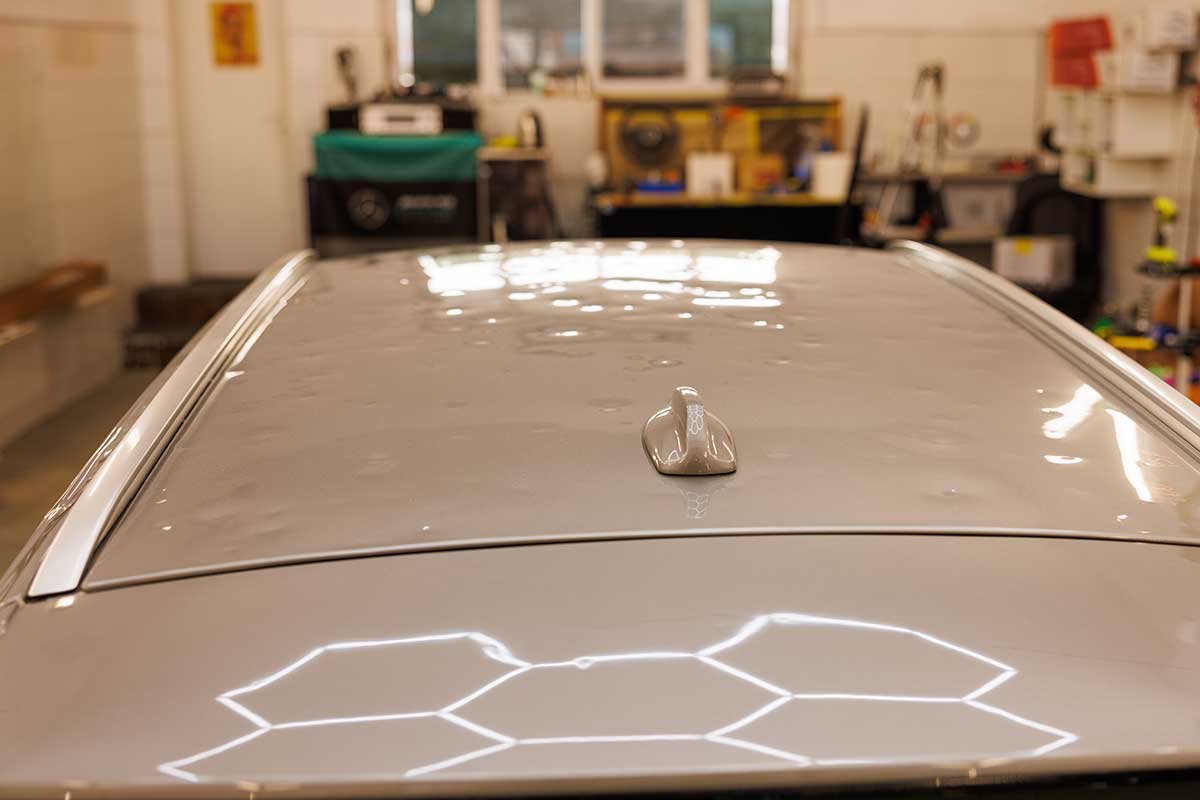
Hail damage is often a strong candidate for paintless repair because the dents are commonly shallow and the original paint may remain intact. The result depends on the size of the hailstones, the number of impacts, the panel material, and whether the dents overlap.
Hail can affect roofs, hoods, trunks, doors, and other horizontal surfaces. A vehicle with many small dents may take longer to assess than one with a single visible impact. The roof may also contain braces, a sunroof assembly, or headliner components that limit access.
In Apex, seasonal thunderstorms and changing weather conditions can occasionally bring hail-producing storms. After such an event, it is useful to inspect the roof, hood, trunk, and upper door surfaces in bright, angled light. Small dents may be easier to see from reflections than from a direct overhead view.
Are plastic bumpers and body panels repairable with PDR?
Traditional PDR is mainly used for metal panels and certain aluminum panels. Plastic bumpers do not behave like sheet metal, so they are usually repaired with different techniques.
A plastic bumper may regain some of its shape when warmed and carefully repositioned, but this is not the same process as manipulating a metal panel from behind. Cracks, torn mounting points, deep gouges, and paint damage can make bumper repair more involved.
Some composite or plastic body panels may also have limits based on their thickness, flexibility, and reinforcement. The material should be identified before assuming that a metal-repair method applies.
Can a do-it-yourself dent repair make the damage worse?
Yes. Uncontrolled pushing, suction tools, hot water, glue-pulling kits, or sharp objects can create additional damage. Excessive pressure may produce high spots, stretch the metal, damage the paint, or leave marks that are more difficult to correct.
A common mistake is trying to remove a dent quickly from one point. Proper PDR generally involves reading the panel’s contours, locating the lowest areas, and making gradual adjustments with controlled pressure. Lighting and reflection patterns are used to monitor the surface.
Small, shallow dents may look simple but can still be difficult to correct cleanly. If the damage is near a seam, airbag area, wiring, or a structural component, improvised tools can also create safety concerns.
How can vehicle owners judge whether PDR may be suitable?
A preliminary assessment can focus on five questions:
- Is the paint intact?
- Is the dent shallow, rounded, or sharply creased?
- Is the damage away from an edge or body seam?
- Does the panel appear stretched, torn, or wavy?
- Is there safe access behind the damaged area?
PDR is most promising when the dent is smooth, the paint has not failed, and the panel has not been permanently stretched. It is less suitable when the impact has caused paint loss, a sharp fold, torn metal, severe edge damage, or structural distortion.
The practical answer is that Paintless Dent Repair can remove many types of dents, but not all dents. The method is determined by the condition of the paint, the panel material, the depth and shape of the damage, and access to the back of the panel—not simply by the dent’s size.