

 See My Latest Article on HelloNation
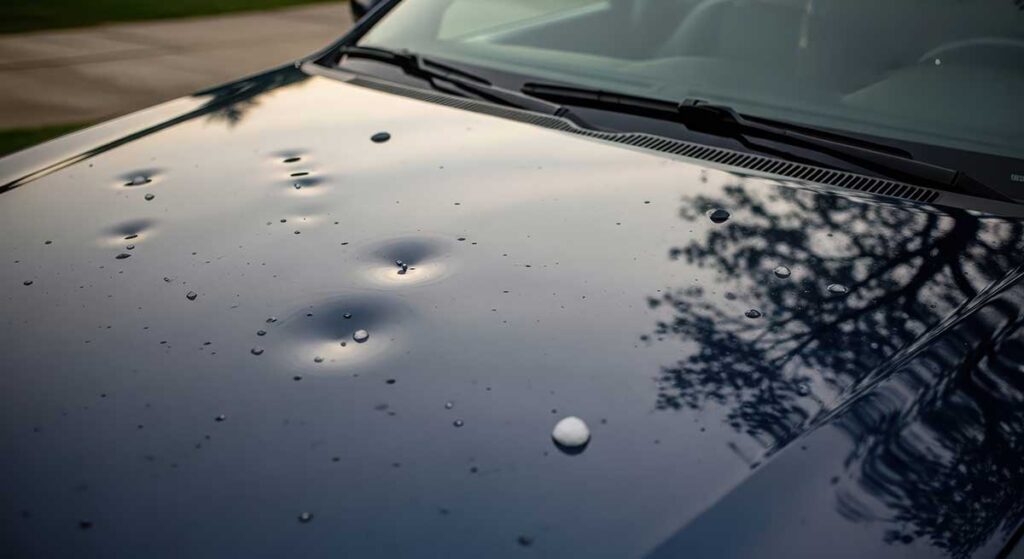
A small dent can look simple from the outside, but the time needed to repair it depends on more than its size. The technician must consider the dent’s location, depth, access behind the panel, the condition of the paint, and whether the metal has been stretched.
For many ordinary door dings and shallow parking-lot dents, paintless dent repair may take anywhere from 30 minutes to several hours. Larger or more complicated damage can require most of a day, and some dents are not good candidates for this repair method at all.
How long does a typical paintless dent repair take?
A straightforward dent may be repaired in about 30 minutes to 2 hours. This commonly includes shallow dents on doors, fenders, quarter panels, or the hood where the metal remains flexible and the paint is intact.
A more involved repair may take 2 to 5 hours. Examples include:
- A dent with several connected low spots
- Damage located near a body-line or sharp contour
- A larger dent that requires careful reshaping
- A panel with limited access behind the damaged area
- A dent that is difficult to see because of shadows or reflections
If several panels are damaged, the total time may extend to a full day or longer. The repair time is based on the combined complexity of the damage, not simply the number of dents.
Why does the size of the dent not tell the whole story?
A large, shallow dent may be easier to repair than a small, deep crease. Size matters, but shape and location often matter just as much.
A broad dent with smooth edges may allow the metal to return gradually to its original position. A narrow crease, sharp impact point, or dent with stretched metal requires more precise work. The repair process may involve many small adjustments rather than one large push.
The panel’s design also affects the timeline. Modern vehicle panels often include ridges, curves, reinforced sections, and complex transitions. A dent crossing one of these areas may take longer because the original shape must be restored without creating a visible high spot.
Does access behind the panel affect repair time?
Yes. Access is one of the most significant factors in paintless dent repair.
The repair process generally involves carefully reaching the back side of the panel with specialized tools. If the area is open and easy to reach, progress may be relatively quick. If interior trim, bracing, insulation, wiring, or other components block access, additional preparation may be necessary.
Common access challenges include:
- Dents near window mechanisms
- Damage close to structural bracing
- Areas behind interior panels or speakers
- Deep dents near the edge of a panel
- Damage near a headlamp, tail lamp, or other fixed component
Limited access does not always make repair impossible. It may simply mean that more time is needed to position tools safely and work through a smaller opening.
Can weather in Apex affect how long the work takes?
Temperature and weather can influence the working conditions, particularly when the vehicle is outdoors or moved between different environments. Hot sun can make panels and interior surfaces extremely warm, while colder conditions can make some materials less flexible.
Seasonal weather in Apex, NC includes hot, humid summers, occasional winter freezes, and periods of heavy rain from storms. Those conditions may affect where a vehicle can be inspected or repaired, especially if the work requires clear lighting, dry surfaces, and stable temperatures.
Weather does not automatically prevent paintless dent repair, but rain, severe heat, or poor visibility may add preparation time or require the vehicle to be moved indoors. A vehicle covered with road film, pollen, or moisture may also need to be cleaned or dried before the damage can be examined accurately.
How long does it take to inspect a dent?
A basic inspection may take only a few minutes, but a careful evaluation can take longer. The visible dent is only part of the assessment.
The damage should be checked for:
- Cracked, chipped, or separated paint
- Evidence of previous bodywork
- Sharp creases or stretched metal
- Damage extending into an adjacent panel
- Distortion around the edge of the dent
- Obstructions behind the panel
- Possible impact to sensors, lights, trim, or internal parts

Lighting is especially useful during inspection. Reflections across the panel help reveal the full shape of the damage, including shallow ripples that may not be visible in ordinary daylight.
Does the condition of the paint change the timeline?
Paintless dent repair is designed for dents where the original paint surface is still intact. If the paint has cracked, flaked, or been deeply scratched, the repair may require a different process or additional refinishing.
Even when the paint appears intact, older or previously repaired paint may require extra care. Factory-applied paint usually has a predictable level of flexibility, while some aftermarket repairs may be more likely to crack or separate during reshaping.
A dent with paint damage may still be repairable, but paintless dent repair alone may not restore the entire panel. The time required then depends on both the metal repair and any necessary surface or paint work.
How long do hail dents take to repair?
Hail damage can range from a few isolated dents to widespread damage across the hood, roof, trunk, doors, and fenders. A small number of accessible hail dents may be repaired in several hours. Extensive damage can take a full day or substantially longer.
The main factors are:
- Number of dents
- Size and depth of each dent
- Location across the vehicle
- Amount of access needed
- Whether the dents overlap or form a larger damaged area
- Condition of the paint and trim
Hail damage often takes longer to assess because many dents are shallow and difficult to see without specialized lighting. A panel may look acceptable from one angle while showing numerous small depressions from another.
Can a dent be repaired while waiting?
Sometimes, but not always. A minor, accessible dent may be completed during a short visit. More complex damage may require the vehicle to remain available for several hours so the work can be completed carefully.
The phrase “same-day repair” can mean different things. It may refer to a repair finished in under an hour, a vehicle returned later that day, or a larger project completed over an extended work period. The actual timeline depends on the damage rather than the label.
Rushing the process can create visible high spots, uneven contours, or incomplete correction. Paintless dent repair is a gradual reshaping process, so careful work is generally more useful than simply aiming for the shortest possible time.
What should vehicle owners expect after the repair?
A properly repaired panel should have a smooth contour when viewed under changing light and from different angles. The final inspection may take a few minutes because subtle distortions can be easier to identify after the main dent has been corrected.
The vehicle may also need a quick check of nearby trim, glass, lights, weather seals, and panel gaps, particularly when the impact occurred close to an edge or body opening.
For residents in Apex, everyday conditions such as tight residential driveways, crowded shopping areas, road debris, and seasonal storms can produce different types of minor body damage. The most useful timing estimate comes from examining the actual dent, not from its appearance in a single photograph or from its diameter alone.