

 See My Latest Article on HelloNation

What does paintless dent repair usually cost?
In Apex, NC, paintless dent repair commonly ranges from about $125 to $500 for a small, repairable dent. Larger dents, sharp creases, dents on body lines, and hail damage affecting several panels can cost $600 to several thousand dollars, depending on the amount and location of damage.
These figures are general planning ranges, not fixed prices. Paintless dent repair, often called PDR, is priced according to the actual damage rather than a simple hourly rate or a universal “price per dent.”
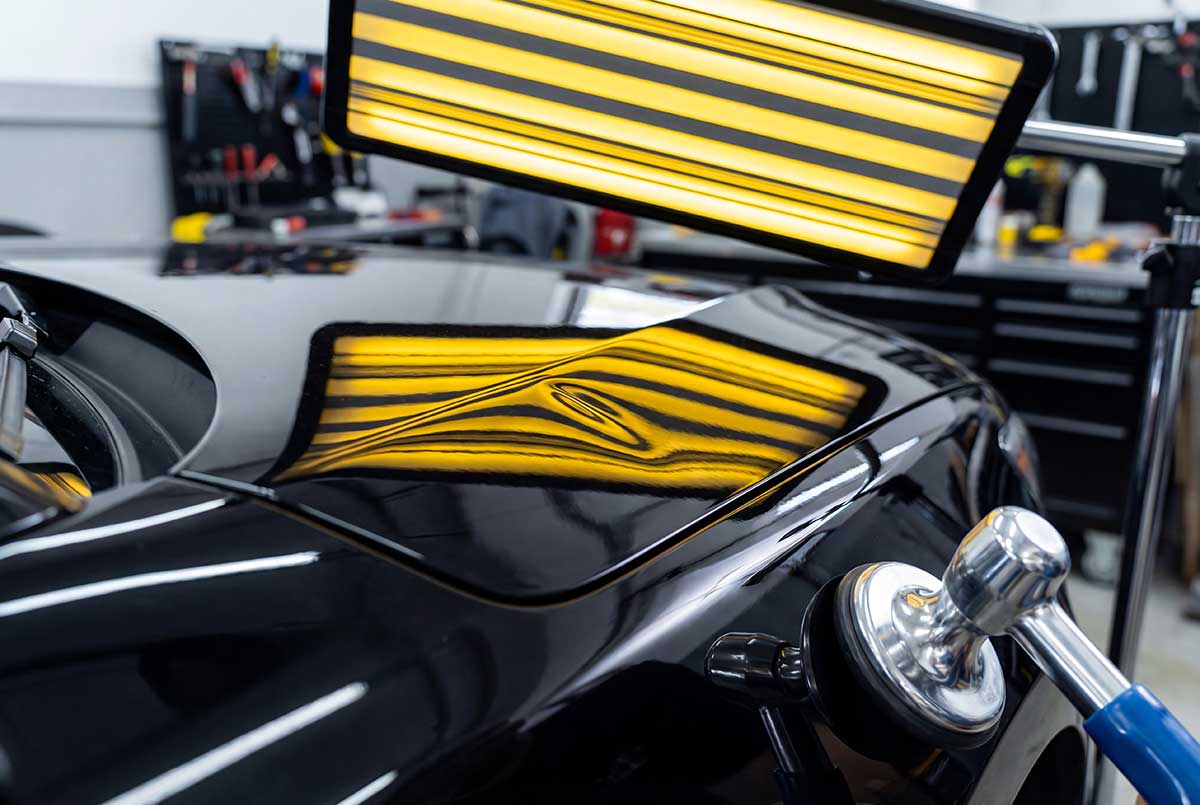
PDR reshapes the vehicle’s original metal or aluminum from behind the panel, usually without sanding, filling, or repainting. The method works best when the paint remains intact and the metal has not been stretched beyond repair. Access behind the panel and the condition of the damaged area are also central to the decision. ([support.i-car.com](https://support.i-car.com/download/435?utm_source=openai))
What is the typical price for a small door ding?
A shallow door ding with unbroken paint may cost approximately $125 to $250 when it is easy to reach and does not involve a sharp crease or body-line distortion.
A larger or deeper dent on the same door may fall closer to $250 to $500. A dent near a structural brace, window mechanism, door edge, or reinforced area may cost more because interior trim or other components could need to be moved for proper access.
Several small dings on one panel are not always priced as separate repairs. The total may reflect the combined time required to inspect, access, and refine the panel.
Why do some dents cost much more than others?
The most significant pricing factors are size, depth, location, metal movement, paint condition, and access.
Size and depth
A broad, shallow dent can sometimes be easier to repair than a smaller dent with a deep impact point. A deep dent may stretch the metal, creating tension that makes the panel harder to return to its original shape.
Size still matters because larger damaged areas generally require more controlled work and more time to blend the repair into the surrounding panel.
Sharp creases and body lines
A soft round dent is often more straightforward than a crease or fold. Damage that crosses a strong character line can be especially demanding because the original contour must be restored without creating a visible wave.
A sharply folded area may not be a suitable candidate for fully paintless repair if the metal or finish has been damaged too severely.
Location on the vehicle
The same-size dent can have different pricing depending on where it appears. Common cost-increasing locations include:
- Door edges and panel edges
- Wheel arches
- Roof rails and reinforced roof sections
- Areas near braces or impact beams
- Dents close to lamps, handles, trim, or sensors
- Aluminum panels with limited access
A hood or door may appear easy to reach, but internal supports can make the repair more complex than expected.
Paint condition
PDR is generally intended for dents where the original paint is intact. Cracked, chipped, or peeling paint may indicate that conventional refinishing or another repair method is needed.
Paint condition also matters in Apex because heat, humidity, tree debris, road grit, and seasonal weather can affect an older finish. A surface that looks intact from a distance may show small cracks or previous repair work under close inspection.
Access behind the panel
Technicians need a safe way to reach the back of the dent with specialized tools. Access may come through existing openings, removed trim, or panel edges. Industry repair guidance emphasizes access as a major part of determining whether PDR is appropriate. ([support.i-car.com](https://support.i-car.com/download/658?utm_source=openai))
If access is restricted, the repair may take longer, or the panel may not be suitable for PDR. Creating new holes in a vehicle panel is not considered a routine or appropriate access method. ([rts.i-car.com](https://rts.i-car.com/11291.html?utm_source=openai))
How much does hail damage repair cost?
Hail damage is usually priced as a package rather than as one isolated dent. A vehicle with a few small dents may cost several hundred dollars, while widespread damage across the hood, roof, trunk, doors, and fenders can reach $2,000 to $6,000 or more.
The final cost depends on:
- The number of dents
- The size and depth of each dent
- Which panels are affected
- Whether the paint is intact
- Whether trim, headliners, or other components must be removed
- Whether the damage is concentrated or spread across the vehicle
Weather-related damage can be more extensive than it first appears. After a strong storm, reflections across the roof and hood may reveal many shallow dents that are difficult to see when the vehicle is dusty, wet, or parked in low light.
Is paintless dent repair cheaper than traditional body repair?
Often, yes, but not always. PDR may cost less because it can avoid paint mixing, body filler, sanding, masking, refinishing, and replacing an otherwise repairable panel.
Traditional body repair may be more appropriate when the paint is broken, the metal is badly stretched, the panel is torn, or the damage affects plastic parts such as some bumpers and trim. Plastic components and severely damaged panels may exceed the practical limits of PDR. ([thedentcompany.com](https://thedentcompany.com/faq-limitations-of-paintless-dent-repair-pdr/?utm_source=openai))
A lower price should not be the only comparison. A repair that preserves the original finish may be preferable in some cases, while a conventional repair may be necessary for structural, finish-related, or safety reasons.
Does insurance cover paintless dent repair?
Coverage depends on the cause of the damage and the policy. Hail damage may be handled under comprehensive coverage, while a collision-related dent may fall under collision coverage. Deductibles can make an insurance claim financially impractical for a small dent.
Before filing a claim, vehicle owners may want to review:
- The applicable deductible
- Whether the damage resulted from hail, collision, or an unknown event
- Whether multiple dents are part of one incident
- Whether the policy requires an inspection
- Whether reporting a claim could affect future premiums
Insurance rules vary, so the policy documents and carrier’s claims department are the authoritative sources.
Can a photo provide an accurate price?
A photo can support a preliminary discussion, but it rarely provides a dependable final price. Photos may not show the dent’s depth, hidden creasing, paint cracking, access limitations, or previous bodywork.
A useful photo set includes:
- A full view showing the panel
- A straight-on view of the dent
- An angled view showing depth
- A close-up of the paint and edges
- A reference object for scale
An in-person inspection is generally more reliable, particularly for dents on body lines, near panel edges, or behind reinforced sections.
What should vehicle owners ask about the price?
A clear explanation should identify whether the amount covers access, trim removal, multiple panels, taxes, and any work that would be needed if PDR is not suitable.
It is also reasonable to ask whether the price assumes:
- Paintless repair only
- Removal and replacement of interior or exterior trim
- Multiple dents on the same panel
- Hail damage across several panels
- Additional refinishing if paint damage is discovered
For residents dealing with storm damage, parking-lot dings, or narrow driveways where neighboring vehicles may be close together, the most useful question is not simply “How much per dent?” It is whether the damage can be restored without compromising the original paint or panel shape.