

 See My Latest Article on HelloNation
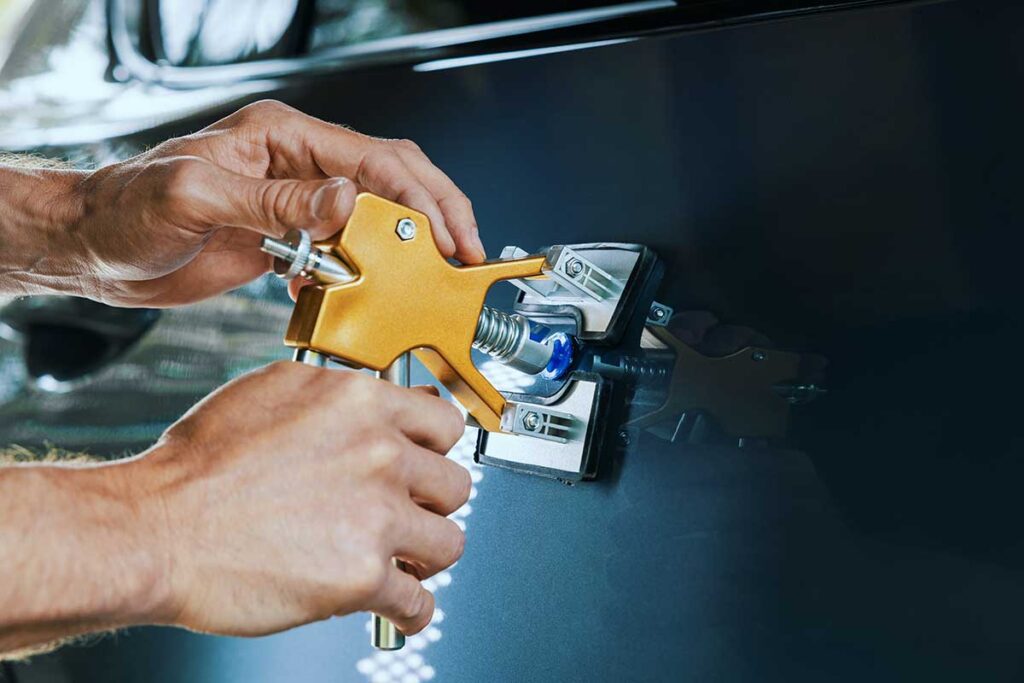
Paintless Dent Repair (PDR) is a method of reshaping a vehicle’s metal from behind or around the damaged area without sanding, filling, or repainting the panel. For many shallow dents and door dings, the process can preserve the vehicle’s original finish while correcting the visible distortion.
The work is not simply a matter of pushing a dent outward. A careful repair involves inspecting the damage, determining how the metal moved, gaining access to the back of the panel, and gradually returning the surface to its original shape.
What happens during the first inspection?
The first step is a close examination of the dent, the paint, and the surrounding panel. The damage is assessed under controlled lighting so that small highs, lows, creases, and changes in reflection are easier to see.
The inspection usually considers:
- The size and depth of the dent
- Whether the metal is stretched, sharply creased, or folded
- The condition of the paint surface
- The location of the dent on the panel
- Whether the back of the damaged area can be reached
- The presence of bracing, wiring, airbags, or other parts behind the panel
- Whether previous repairs have altered the metal
A dent may look simple from a distance but reveal a narrow crease or stretched section when viewed under specialized lighting. That detail affects the repair approach and the amount of time required.
In Apex, seasonal weather can also influence how a vehicle is examined and repaired. Heat, humidity, pollen, and sudden temperature changes may affect surface cleanliness and the flexibility of some exterior materials. A clean, dry panel makes it easier to distinguish actual damage from dirt, water spots, or surface residue.
How is access gained behind the dent?
PDR generally requires access to the back side of the damaged panel. The access point depends on where the dent is located and how the vehicle is built.
Possible access routes include:
- Existing openings inside the door or trunk
- Access points beneath interior trim
- Areas behind removable lights or panels
- The underside of a hood, roof, or trunk panel
- Gaps near weather seals or interior liners
Trim pieces may need to be removed carefully to prevent broken clips, scratches, or damage to wiring. In some cases, access is limited because of reinforcement bars, sound-deadening material, window mechanisms, or safety equipment.
Technicians use specially shaped rods, hooks, and other tools selected for the panel and the location of the damage. The tools are not normally used to force the metal into position all at once. Controlled pressure is applied gradually, often from several different points around the dent.
How does the metal return to its original shape?
A dent is corrected through a series of small adjustments rather than one large push. The repair process usually begins around the outer edge of the damaged area and progresses toward the center.
The goal is to relax the tension in the metal and restore the original contour. Too much pressure in one location can create a raised spot, sharp distortion, or a visible ripple. For that reason, the surface is checked repeatedly during the repair.
Lighting is especially important. A reflected line or pattern across the panel shows how the metal is moving. If the reflection bends or breaks, the surface is not yet level. As the repair progresses, the reflected pattern becomes more consistent.
Some repairs also involve lightly tapping down small raised areas with a precision tool. This helps control areas where the metal has moved above its original level. The process requires patience because the final corrections may be extremely small.
Does the paint need to be removed?
Normally, no. One of the defining features of PDR is that the original factory paint remains in place.
Keeping the original finish can be useful because it avoids several steps associated with conventional body repair, such as:
- Sanding and filler application
- Priming and color matching
- Blending paint into adjacent panels
- Clear-coat application
- Waiting for refinishing materials to cure
However, PDR cannot restore paint that is already chipped, cracked, peeling, or deeply scratched. If the impact broke the paint or caused damage that extends through the finish, a paint-based repair may be necessary in addition to, or instead of, metal reshaping.
A dent can sometimes be repaired without repainting even when a small mark remains on the surface. That mark may be transferred material, road residue, or a scuff rather than a break in the paint. The condition of the finish should be evaluated separately from the shape of the metal.
How long does the repair take?
Repair time depends more on the complexity of the damage than on its diameter alone. A small dent in an easy-to-reach location may take less time than a smaller but sharply creased dent near a panel edge.
Factors that affect the process include:
- The number of dents
- The depth and sharpness of each dent
- The type and thickness of the metal
- The location of the damage
- Access behind the panel
- Previous bodywork
- Whether trim or interior components must be removed
- The level of finish required
A shallow door ding may be relatively straightforward, while hail-related damage can involve many separate impact points across the roof, hood, trunk, and side panels. Each area must be inspected and corrected without creating new distortions.
What types of damage are poor candidates for PDR?
PDR is most suitable for damage where the paint is intact and the metal has not been severely stretched or torn. It may be less appropriate when:
- The paint is cracked, missing, or peeling
- The panel has a sharp, deep crease
- The metal is folded over a body line
- The dent reaches the edge of the panel
- The panel contains extensive previous filler or repainting
- The impact has caused a hole or split
- Structural components behind the panel are damaged
- The panel is badly stretched
This does not mean every difficult-looking dent is automatically beyond repair. It means the repair method must be selected after examining the panel’s condition, construction, and access.
Are there special concerns for vehicles in Apex?
Local driving and parking conditions can create familiar types of cosmetic damage. Vehicles parked in shopping areas, apartment communities, workplaces, schools, and driveways may be exposed to door impacts, cart contact, falling branches, and storm-related debris.
Summer heat can make a vehicle’s exterior and interior very warm, while winter mornings may bring colder, less flexible materials. Pollen and road film can also collect along seams and trim. Before an inspection, washing and drying the affected area can make the damage easier to evaluate, although aggressive scrubbing should be avoided if the paint is already chipped.
Storms may produce multiple dents over a broad area rather than one isolated impact. In those cases, documenting the condition with clear photographs and noting when the damage occurred can help distinguish fresh damage from older marks.
What should vehicle owners expect after the repair?
A properly completed repair should leave the panel’s reflections smooth and consistent from different viewing angles. The vehicle may still have a paint chip, scratch, or unrelated imperfection that was not part of the metal repair.
It is also normal for the process to involve several inspection stages. The surface may be checked after the main dent is lifted, again after smaller high spots are refined, and once more after the panel is cleaned and viewed under different lighting.
The most useful expectation is that PDR is a controlled restoration process, not a quick push from the opposite side. Its success depends on the condition of the paint, the movement of the metal, the available access, and the care used during each adjustment.