

 See My Latest Article on HelloNation
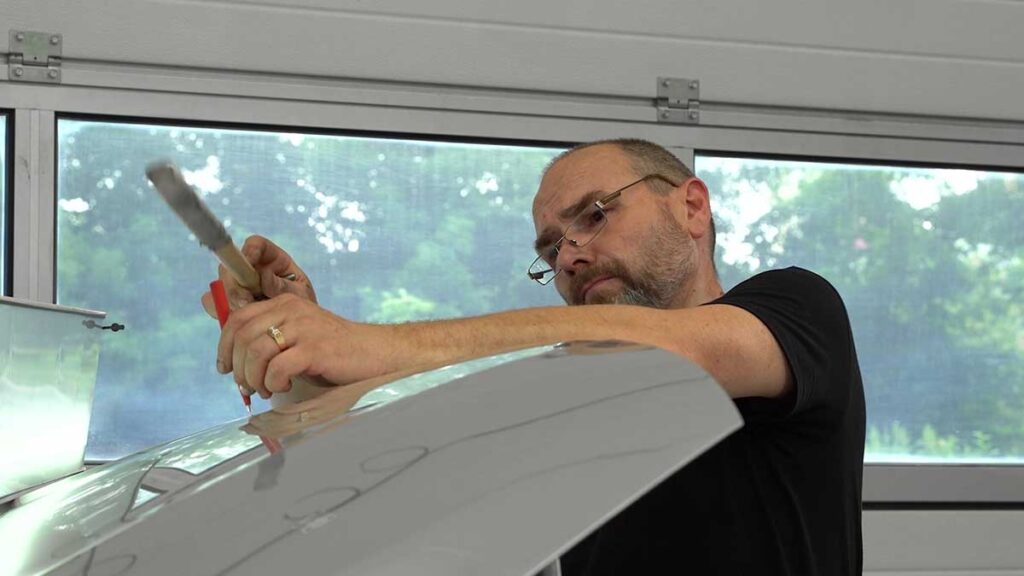
Paintless Dent Repair, often called PDR, is designed to preserve a vehicle’s existing paint rather than refinish it. When the paint is intact and the metal can be carefully reshaped, the repair can usually be completed without sanding, filling, or repainting the damaged area.
That does not mean every dent is a good candidate. The condition of the paint, the depth and location of the dent, the type of metal, and the way the damage occurred all affect whether PDR can be performed safely.
Can Paintless Dent Repair damage automotive paint?
Usually, no. Properly performed PDR uses controlled pressure from behind the panel or carefully managed pulling from the outside. The goal is to return the metal to its original position while leaving the factory paint system undisturbed.
Modern automotive paint is flexible enough to tolerate a certain amount of panel movement. However, paint can crack or separate if it has already been weakened by the impact, age, previous bodywork, corrosion, or extreme stretching of the metal.
The repair process itself is not automatically risk-free. Poor tool placement, excessive force, rushed work, or unsuitable techniques can create additional damage. The safest approach is to evaluate the paint and the panel before deciding whether PDR is appropriate.
Why does factory paint usually hold up?
Vehicle paint is not just a thin colored layer. A typical factory finish includes several bonded layers, such as:
- E-coat or corrosion protection
- Primer
- Color coat
- Clear coat
These layers are applied under controlled manufacturing conditions and cured as a system. Because the paint is bonded to the metal before the dent occurs, it can often flex with the panel as the metal is gradually moved.
Factory paint may also be more consistent and durable than a repaired section that was refinished outside the manufacturing process. That is one reason preserving the original finish can be preferable when the damage allows it.
Still, the paint’s condition matters. A panel that looks normal at first may have hidden stress around a sharp crease, impact point, or stretched edge.
What types of dents are generally safer for PDR?
PDR is most suitable for shallow or moderate dents where the paint remains intact and the metal has not been severely stretched. Broad door dings, small parking-lot dents, and some hail-related damage may fall into this category.
A dent is more likely to be repairable when:
- The paint is not chipped, cracked, or peeling.
- The dent has smooth edges instead of a sharp puncture.
- The panel is accessible from behind.
- The damage is away from an extremely tight body line.
- There is no visible rust at the damaged area.
- The metal has not been pulled too far out of its original shape.
A shallow dent in the center of a door may be relatively straightforward, while a smaller dent on a sharp character line can be more complex. Size alone does not determine whether paint will remain safe.
When can the paint crack during repair?
Paint may crack when the impact has stretched the metal beyond its ability to return smoothly. This is more common with sharp dents, deep creases, collision damage, and damage near an edge or seam.
Existing paint problems also increase the risk. Warning signs include:
- Fine cracks around the dent
- Chipped paint at the impact point
- Clear coat that is already lifting
- Rust or bubbling under the finish
- Evidence of previous body filler or repainting
- A visible crease with a sharply folded center
A vehicle that has been repaired previously may have different paint flexibility from one panel to another. Refinished areas can be more brittle, softer, thicker, or less securely bonded than the original factory finish.
Does cold or hot weather affect the repair?
Temperature can influence paint flexibility and the way metal responds to pressure. In Apex, seasonal changes can expose vehicles to hot sun, humid air, heavy rain, and occasional freezing conditions. Those conditions do not automatically prevent PDR, but they can affect the starting condition of the finish.
Very cold paint may be less flexible, while excessive heat can make some finishes softer or more sensitive to pressure. A controlled work environment helps reduce unnecessary stress. The panel should also be clean and dry so that dirt, grit, or moisture does not interfere with the tools or hide existing damage.
After storms, vehicle owners may notice several small dents across a hood, roof, or trunk. Hail damage can sometimes be suitable for PDR, but a proper inspection is still needed because repeated impacts may stretch the metal or affect the clear coat even when the damage appears minor.
Can PDR repair dents with chipped paint?
PDR can sometimes reshape a panel that has chipped paint, but it does not restore the missing finish. If paint has already been removed, the exposed metal may need separate attention to reduce the chance of corrosion.
The presence of chipped paint does not necessarily mean that moving the metal will cause the damage. It does mean the repair has two separate issues:
1. The panel must be reshaped.
2. The exposed or weakened paint must be protected or refinished as appropriate.
Trying to use PDR to solve a paint problem can lead to unrealistic expectations. PDR changes the shape of the metal; it does not replace color coat or clear coat.
Are glue-pulling techniques safe for paint?
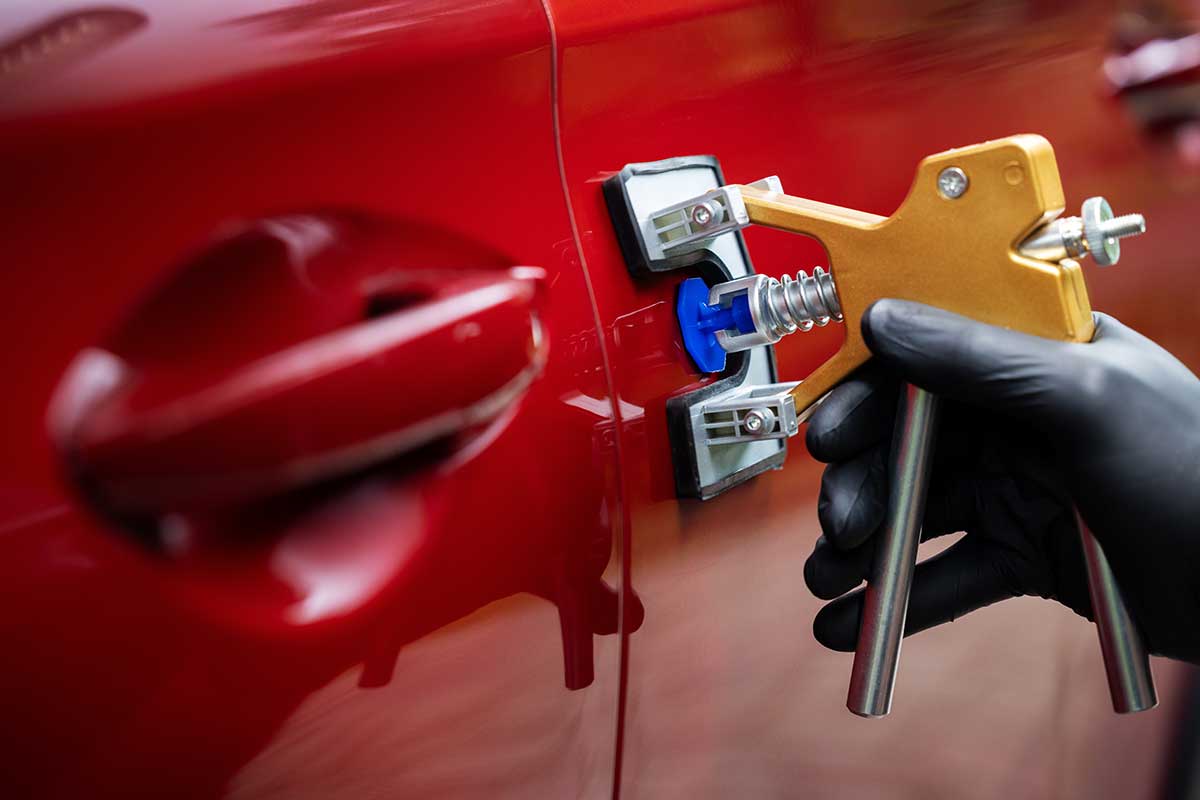
Glue pulling can be safe when the surface and paint are suitable, but it is not appropriate for every vehicle or every dent. The method uses a bonded tab on the outside of the panel and controlled pulling to lift the damaged area.
The risk is higher when the panel has weak adhesion, previous paintwork, peeling clear coat, or brittle finish. Removing a glue tab from a compromised surface can lift paint or expose earlier repair work.
A technician may use access from behind the panel instead, or combine methods carefully. The choice depends on the panel design, the location of bracing, the amount of access available, and the condition of the finish.
How can a vehicle owner recognize unsafe repair claims?
Be cautious of guarantees that every dent can be repaired without any possibility of paint damage. A responsible evaluation should account for the condition of the panel rather than relying only on photographs or dent size.
Useful questions include:
- Is the paint original or has the panel been refinished?
- Are there cracks, chips, or signs of clear-coat failure?
- Is the metal stretched or sharply creased?
- Can the back of the panel be reached safely?
- Could removing interior trim, lights, or other parts create additional risk?
- What happens if hidden damage becomes visible during the process?
Clear explanations are especially valuable after a storm or parking-lot incident, when several panels may be affected at once. Documenting the vehicle before work begins can also help distinguish pre-existing paint defects from changes that occur later.
Is PDR better for the paint than conventional body repair?
When the dent is a suitable candidate, PDR generally preserves more of the original finish because it avoids sanding, body filler, primer, color matching, and clear-coat blending. That can reduce the chance of a visible mismatch between adjacent panels.
Conventional repair may be more appropriate when the paint is broken, the metal is badly stretched, the panel is torn, or the damage affects structural areas. Some repairs require replacement or refinishing regardless of the preferred method.
The practical question is not whether PDR is always safer than painting. It is whether the specific dent can be reshaped without placing unreasonable stress on the existing finish. For local vehicle owners, that decision should be based on a close inspection of the paint, metal, access points, and any previous repairs.